
New Usidistrib 2026
One interface, all your devices.
Born from the “Interface Distrib-UI” thesis, Usidistrib is back in 2026: an interface described once is displayed with each device's native widgets, and shared between them in real time.
One interface per screen
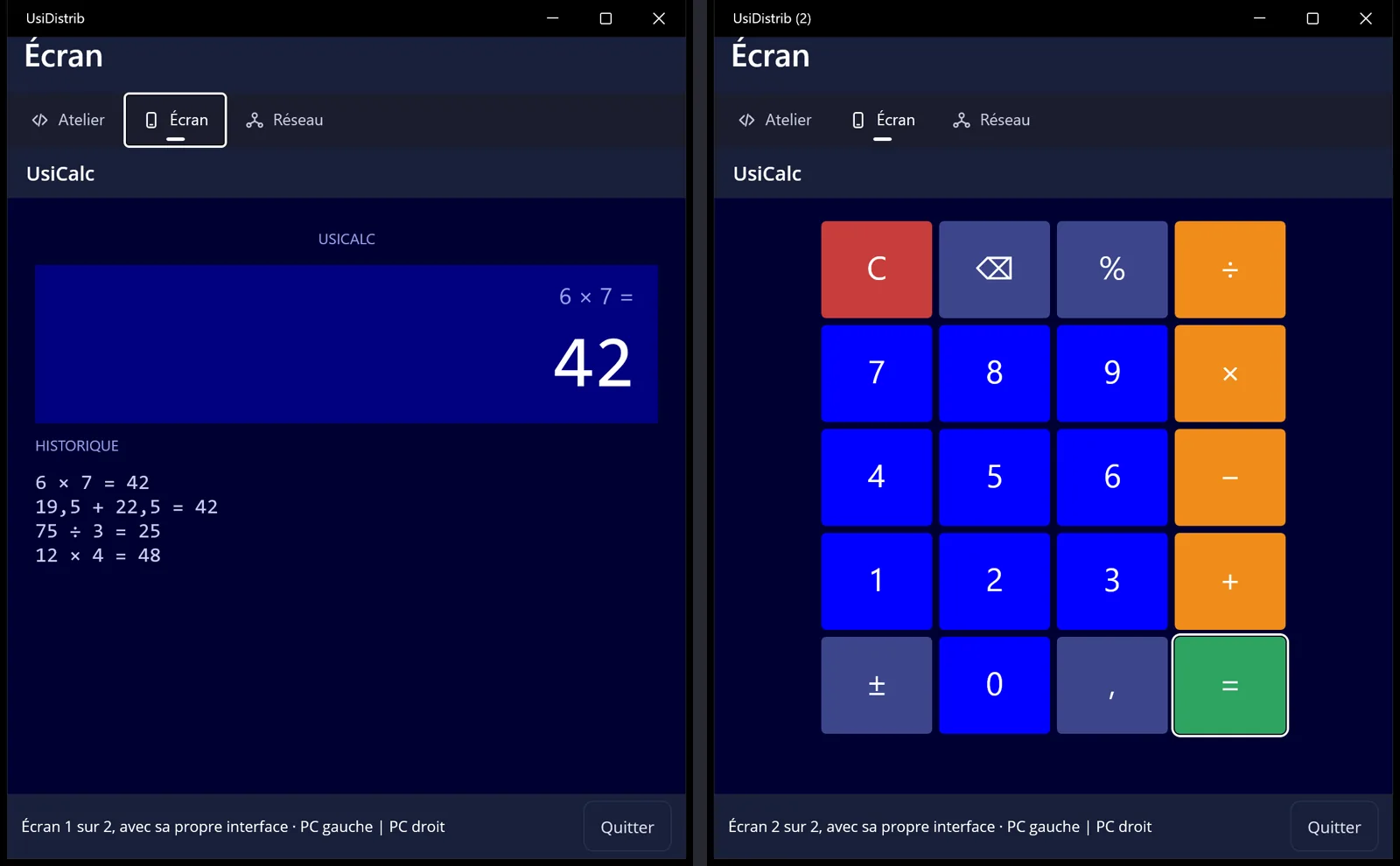
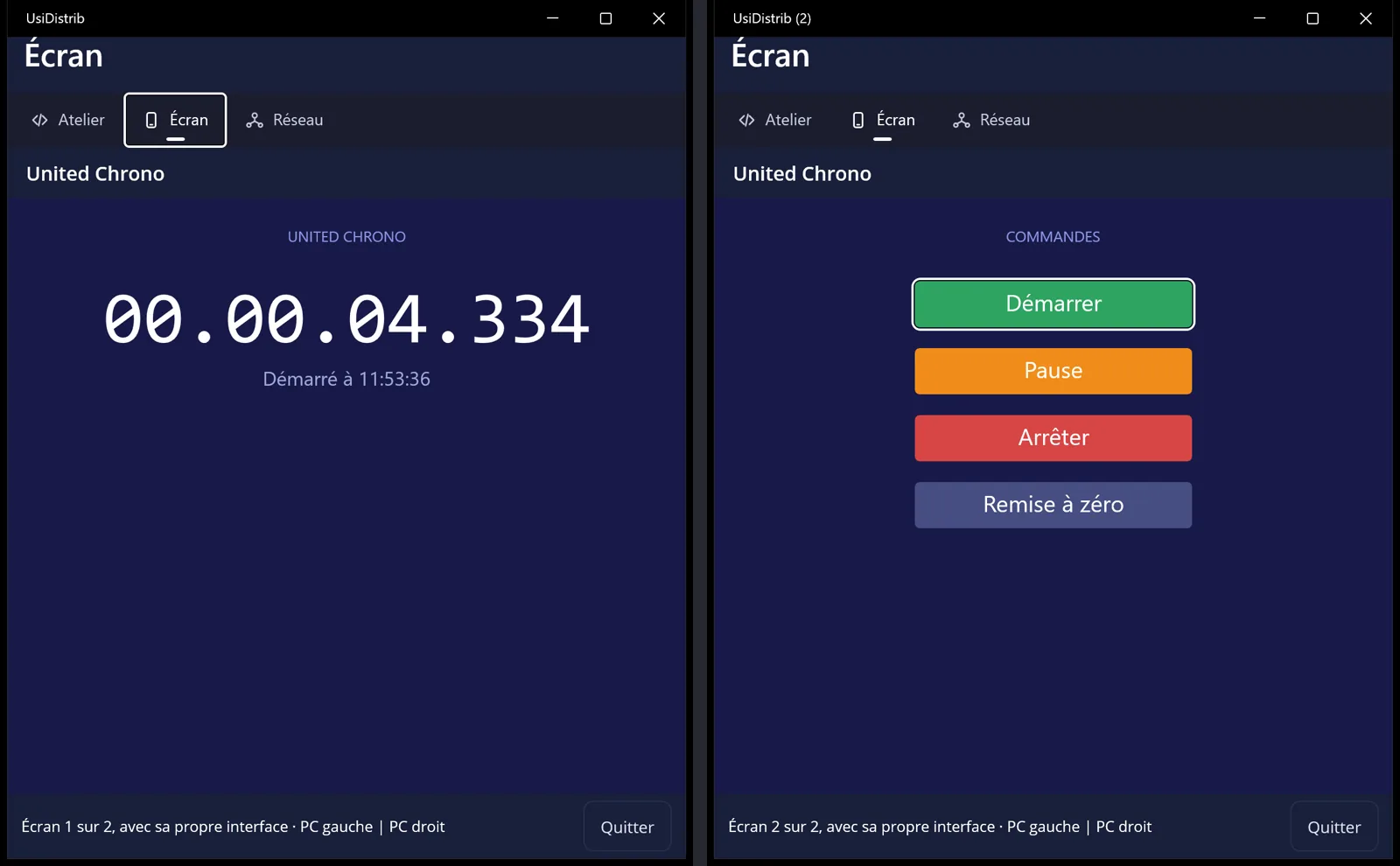
A single application can provide several layouts: on one device, everything is shown; on two, each gets its own part. The UsiCalc calculator shows its display and history on one screen and its keypad on the other; United Chrono separates the time from the controls.
Actions travel over the network: pressing “Start” on one device starts the stopwatch on all the others.
One screen extended across several devices
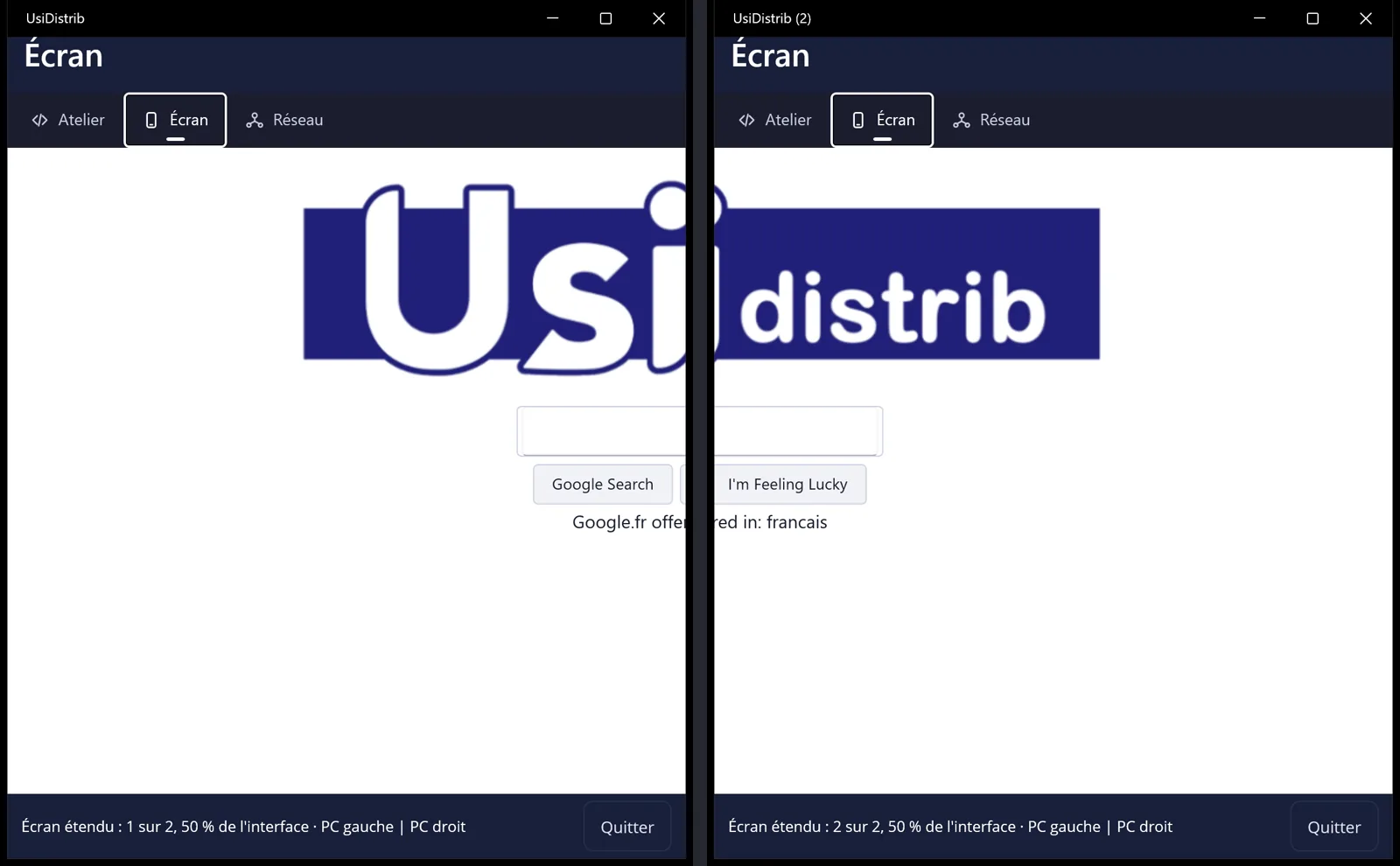
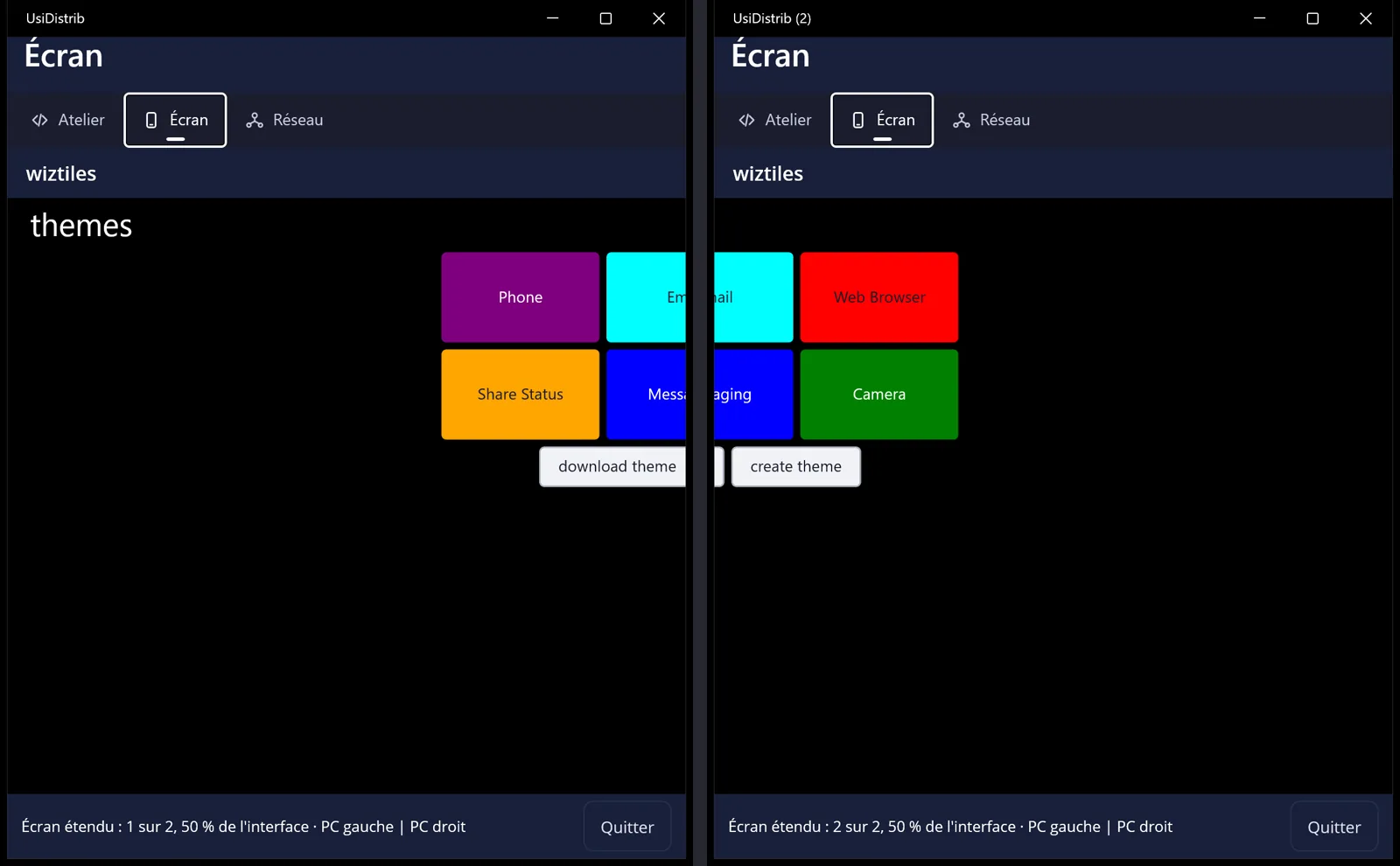
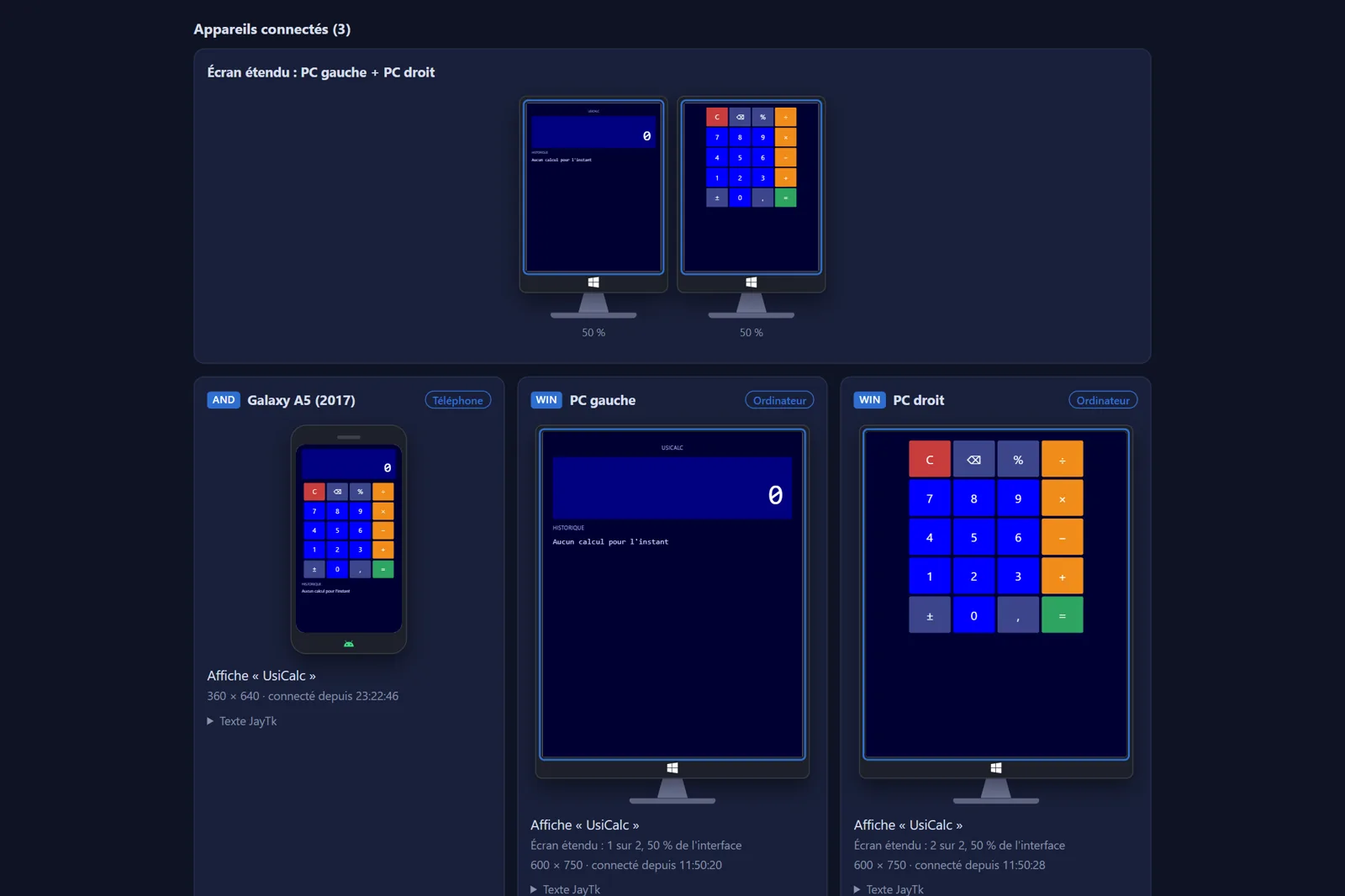
Several devices placed side by side form a single large screen: the interface is drawn at the total width, then each device shows its slice. The split is set in percentages and every change is animated, without redrawing the interface.
Master screen: one device, several displays
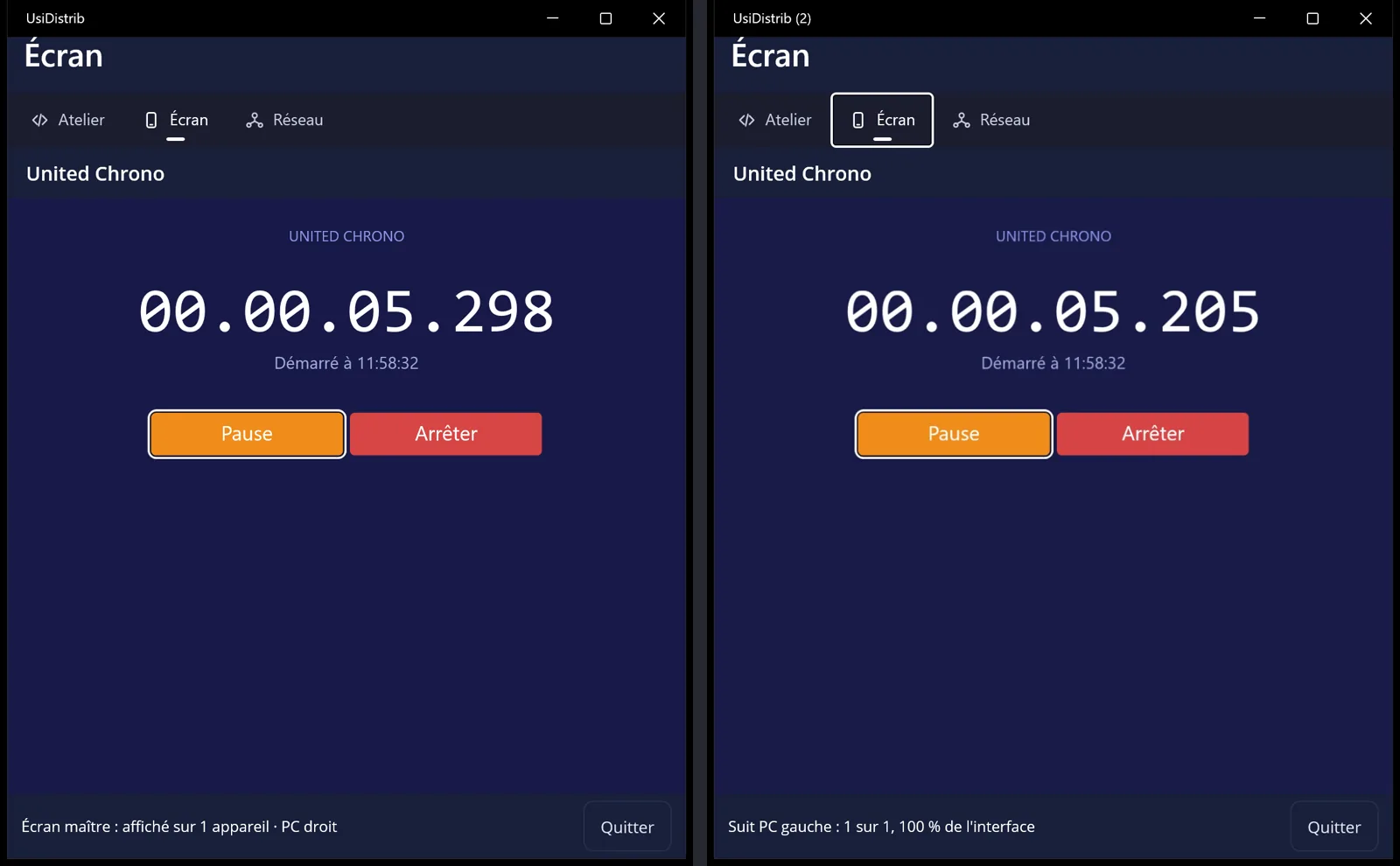
A master device runs the interface and sends its picture to the devices that follow it. A tap on a follower is sent back to the master, which performs it: the same application can be driven from any screen.
A network that finds itself
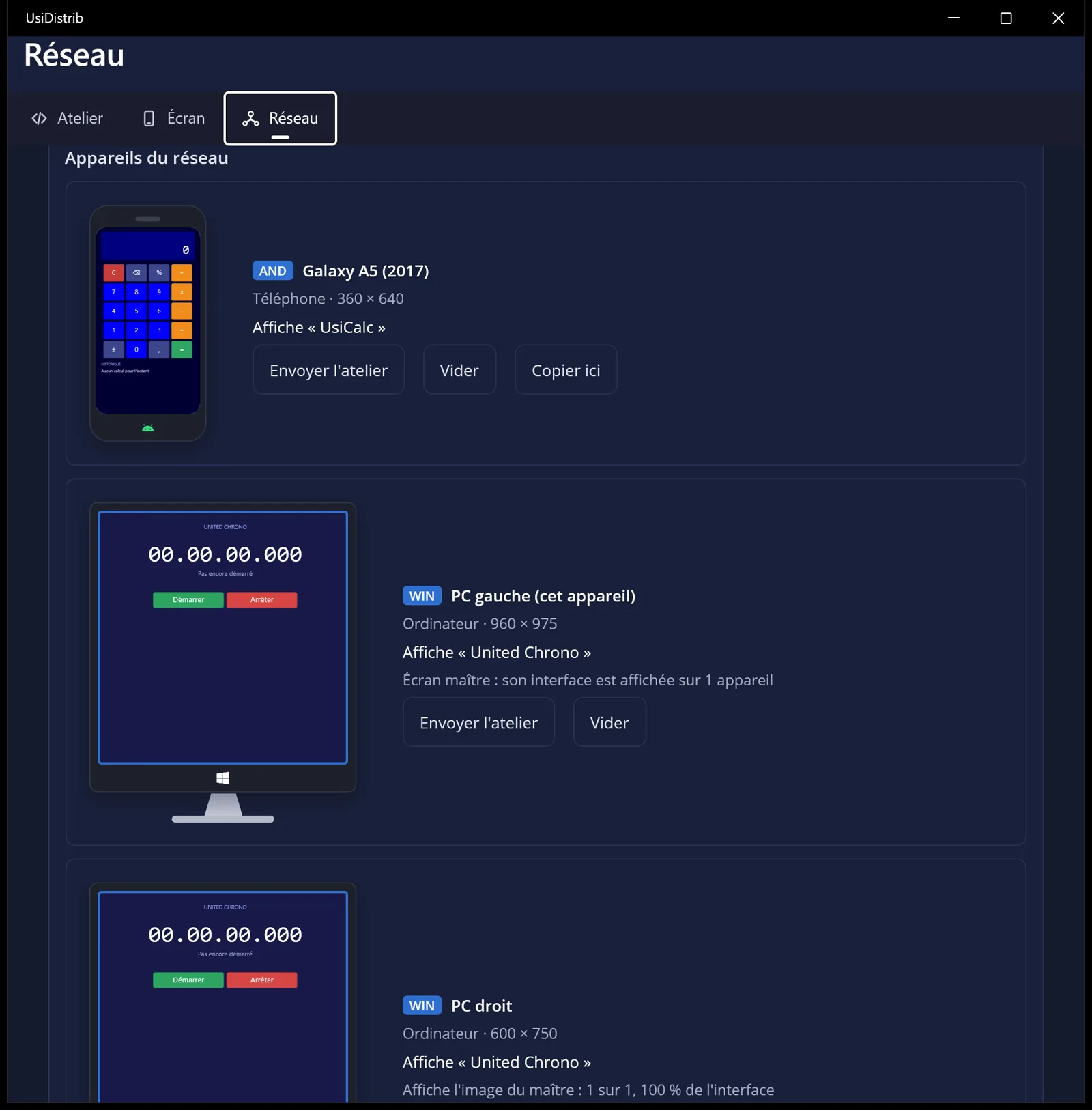
Devices find the server on their own on the local network, announce themselves and see all the others. From any of them, you can send an interface, clear it, copy it, move it or swap two devices' interfaces, and change a widget remotely.
Each device appears as a miniature in its own format (phone, tablet or computer) with its system's logo, showing the interface it displays. The server's status page shows the same, including whole extended screens.
On real phones
First trial on two phones: the Windows app, viewed on an iPhone through remote desktop, and an Android phone. The logo is spread across both screens, then the stopwatch started on one also runs on the other.
Video of the 27 October 2026 trial, without sound (57 s). The interface has been redesigned since.
Under the hood
Usidistrib was fully rewritten in 2026 on a modern .NET foundation, keeping the language and protocol described in the thesis.
- A shared core: JayTk parsing, widget model and network protocol, with no user interface at all
- A .NET MAUI app (Windows and Android today, iOS and macOS from the same code base)
- A web app: every browser tab becomes a device on the network
- A real-time server that keeps the device registry and distributes interfaces
- Automated tests of the language, the protocol and full scenarios with simulated devices
From the thesis to 2026
- 2008
European SELFMAN project: a first distributed system across Windows, Linux, iOS and Android.
- 2010
The distributed system becomes the subject of the PhD thesis “Interface Distrib-UI” at UCLouvain.
- 2013
Launch of the Usidistrib spin-off: capture robot, CinéCaméo, LiveScore, LLN Campus.
- 2026
Relaunch: full rewrite in .NET 10, extended screen, master screen and web app.
Want to see it in action?
Contact us for a demo on your own devices.